
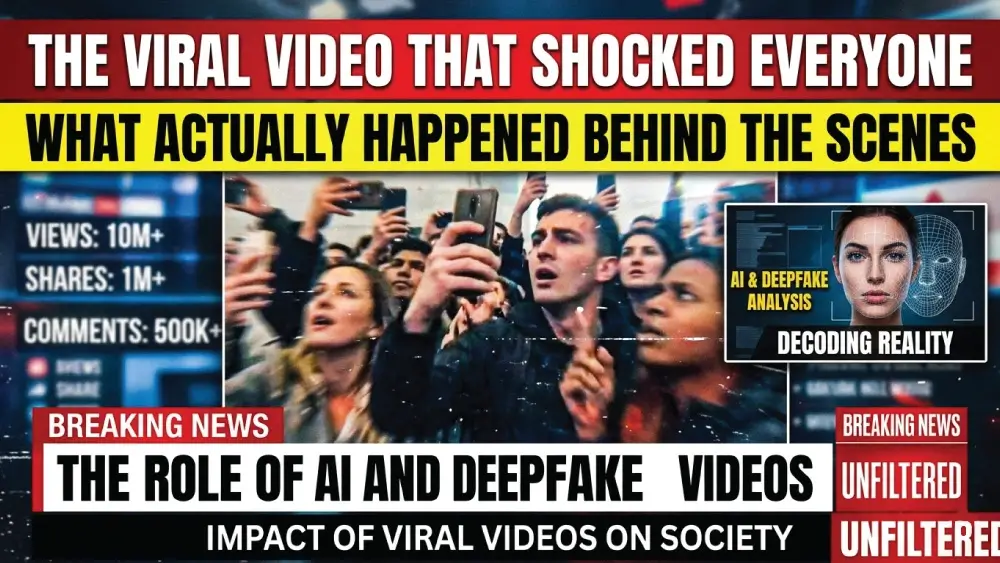
In today’s hyper-connected digital world, it takes just a few seconds for a video to explode across platforms like Instagram, YouTube, and X (formerly Twitter). But behind every viral clip lies a deeper story-sometimes inspiring, sometimes shocking, and often misunderstood. From shocking incidents to misleading edits and even AI-generated illusions, viral videos in 2026 are shaping public opinion faster than ever. In this blog by Trend Trackr, we break down what really happens when a video “breaks the internet”-and why you should always look twice before believing everything you see.
What Does “Breaking the Internet” Really Mean?
The phrase “breaking the internet” refers to content that spreads extremely fast, gaining millions of views within hours or days. A Viral video typically becomes popular through rapid sharing on social media, often driven by emotional reactions like shock, humor, or outrage.
Unlike traditional news, viral videos don’t go through editorial checks-they rely on user engagement. That’s why they can be both powerful and dangerous.
The Viral Video That Shocked Everyone
Recently, several viral clips across India captured massive public attention. One such example includes a shocking parasailing accident video from Goa, where a tourist was seen falling mid-air after a cable snapped. The clip spread rapidly, raising serious safety concerns.
Another bizarre viral moment showed a crowd gathering in Delhi to watch two rats fighting-highlighting how even unusual and trivial events can grab nationwide attention.
These examples prove that anything-from serious accidents to random street scenes-can go viral if it triggers strong emotions.
What Actually Happened Behind the Scenes
While viral videos appear spontaneous, the reality is often more complex:
- Partial Truths: Many clips show only a small part of the full story.
- Old Videos Reused: Some videos are reposted with new captions to mislead viewers.
- Edited Content: Selective cuts can completely change the narrative.
- Staged Content: Some creators intentionally stage scenes to gain views.
For example, authorities recently took action against accounts sharing a misleading concert video that was falsely claimed to be from a different city.
This shows how easily context can be manipulated.
How Misinformation Spreads Through Viral Content
One of the biggest dangers of viral videos is misinformation. A false claim can spread faster than the truth.
A recent example involved a viral video falsely claiming that Narendra Modi had announced a nationwide lockdown. The government later clarified that the video was fake and urged people not to believe such rumors.
Why misinformation spreads quickly:
- People share without verifying
- Emotional content triggers instant reactions
- Algorithms promote high-engagement posts
- Lack of digital awareness
The Role of AI and Deepfake Videos
In 2026, artificial intelligence has added a new layer to viral content. AI-generated videos-also known as deepfakes-can make fake events look real.
From fake speeches to edited celebrity clips, these videos are becoming harder to detect.
One trending example is the AI-generated series Fruit Love Island, which gained millions of views in days, proving how synthetic content can dominate attention.
Why People Believe Viral Videos Instantly
Human psychology plays a huge role in the spread of viral videos:
- Confirmation Bias: People believe what matches their opinions
- Social Proof: If everyone is sharing it, it must be true
- Emotional Impact: Shock and anger reduce critical thinking
- FOMO (Fear of Missing Out): People share quickly to stay relevant
This combination makes viral videos incredibly powerful tools for influence.
Impact of Viral Videos on Society
Viral videos are not just entertainment-they have real-world consequences:
Positive Impact:
- Raise awareness about issues
- Highlight hidden stories
- Promote talent (like viral dancers or creators)
Negative Impact:
- Spread fake news
- Damage reputations
- Create panic or confusion
- Influence public opinion unfairly
In many cases, viral videos have even led to police action or government intervention.
How to Verify Viral Content
Before you hit “share,” follow these simple steps:
Check the Source
Look for official or verified accounts.
Search the Video
Use reverse image search or keywords.
Verify Date & Location
Many viral videos are old but reshared as new.
Look for Fact-Checks
Creators like Archit Vats specialize in debunking viral misinformation.
Cross-Check News
See if credible news outlets are reporting the same story.
The Future of Viral News in 2026
The viral content landscape is evolving rapidly:
- AI-generated videos will increase
- Fact-checking will become more important
- Platforms may introduce stricter policies
- Users will need better digital literacy
Trends like “2026 is the new 2016” show how quickly internet culture can shift and dominate conversations globally.
For platforms like Trend Trackr, this means focusing not just on trending topics-but also on truth and transparency.
Conclusion: Don’t Believe Everything You See
The next time you see a viral video “breaking the internet,” pause for a moment.
Ask yourself:
- Is this real?
- Is the context accurate?
- Who benefits from this going viral?
Because in today’s digital world, the biggest story isn’t just the video-it’s the truth behind it.
FAQs
What makes a video go viral?
A video goes viral when it is widely shared across platforms, usually due to emotional impact, relatability, or shock value.
Are all viral videos real?
No, many viral videos are misleading, edited, or even completely fake.
How can I identify fake viral videos?
Check sources, verify details, and look for fact-check reports before believing or sharing.
What is a deepfake video?
A deepfake is an AI-generated video that manipulates visuals or audio to create fake but realistic content.
Why do people spread fake videos?
Some do it for attention, views, or influence, while others unknowingly share misinformation.