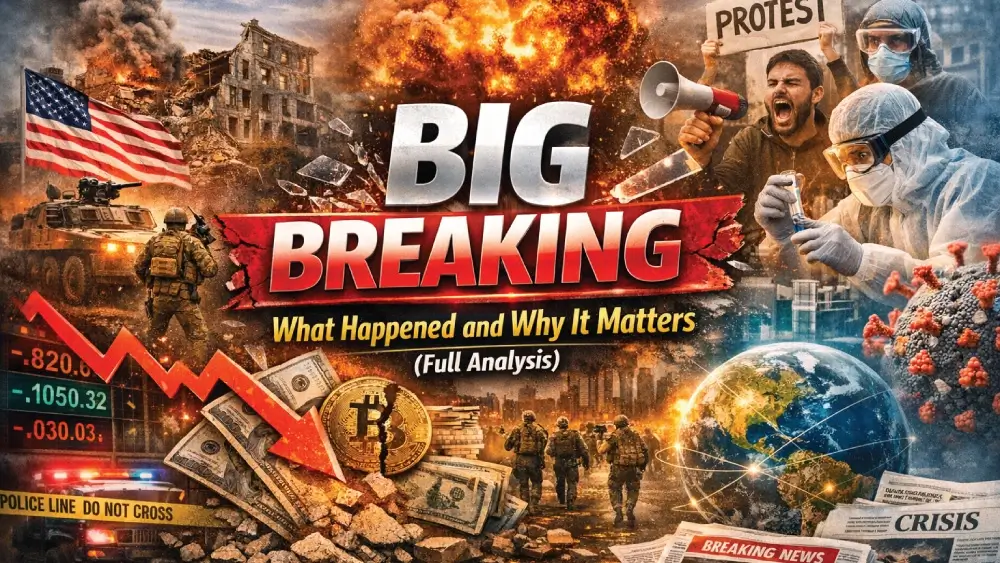
In today’s hyper-connected world, “breaking news” is no longer just an alert-it’s a constantly evolving narrative that shapes public opinion, influences decisions, and often defines the global conversation. This in-depth analysis explores what breaking stories really mean, how they unfold, and why they matter more than ever in 2026.
The Age of Instant News
Breaking news has transformed dramatically over the years. What once relied on radio interruptions or newspaper extras has now become a 24/7 digital cycle driven by smartphones, notifications, and social media platforms. 24-hour news cycle has redefined how quickly information spreads and how audiences consume it.
Today, audiences don’t just receive news-they experience it in real time.
What Is “Big Breaking” News?
“Big Breaking” news refers to events of major significance that demand immediate public attention. These include:
- Political crises
- Natural disasters
- Economic shocks
- Viral incidents
- Major legal or social developments
Breaking news is defined by urgency, immediacy, and evolving details, often reported before full information is available.
However, this speed comes at a cost-early reports are often incomplete or unverified.
What Happened: Understanding the Event Cycle
Every breaking story follows a predictable lifecycle:
Stage 1: Initial Alert
A sudden event triggers immediate coverage-often with limited facts.
Stage 2: Rapid Updates
Media outlets compete to provide real-time updates, sometimes relying on unofficial sources.
Stage 3: Public Reaction
Social media amplifies the story, creating widespread engagement and discussion.
Stage 4: Analysis & Context
Experts step in to explain the deeper meaning behind the event.
Stage 5: Long-Term Impact
The story evolves into policy changes, investigations, or societal shifts.
This cycle shows that breaking news is not a single moment-it’s an unfolding process.
Why It Matters: Impact Beyond Headlines
Breaking news matters because it directly influences:
Public Perception
News shapes how people understand reality. It acts as a “form of knowledge,” helping audiences interpret events.
Policy & Governance
Major breaking stories often lead to new laws or reforms. For example, recent legal actions against tech platforms have sparked debates about stricter regulations for online safety.
Economic Decisions
Financial markets react instantly to breaking developments, sometimes causing volatility.
Global Awareness
Breaking news connects people worldwide, making local events globally relevant.
The Role of Social Media in Breaking Stories
Platforms like Twitter (X), Instagram, and YouTube have revolutionized news dissemination.
Key Changes:
- News breaks on social media before traditional outlets
- Users act as “citizen journalists”
- Content spreads faster than verification
Social media has blurred the line between reporting and reacting, making audiences part of the news cycle.
The Problem of Misinformation & Sensationalism
One of the biggest challenges with breaking news is accuracy.
- Early reports may contain errors
- Rumors spread quickly during high-pressure situations
- Sensational headlines can reduce trust
Studies show that “breaking news” labels can increase perceived sensationalism and decrease credibility.
Additionally, media outlets sometimes amplify incomplete information, turning speculation into perceived facts.
Psychological Impact: Why We Can’t Stop Watching
Breaking news triggers strong emotional responses:
- Fear
- Curiosity
- Anxiety
This leads to a behavior known as Doomscrolling-endlessly consuming updates, especially during crises.
Experts explain that humans are wired to focus on threats, which makes breaking news particularly addictive.
How Breaking News Evolves Over Time
A key feature of breaking stories is that they change constantly:
- Initial reports may be corrected
- New facts emerge
- Narratives shift
This is why analysis is just as important as the news itself. While breaking alerts tell us what happened, deeper reporting explains why it matters.
At Trend Trackr, we emphasize not just speed but context-helping readers stay informed without being misled.
The Future of Breaking News in 2026
The future of breaking news is being shaped by technology and changing audience behavior.
AI in Journalism
AI tools are now helping journalists produce faster content and analyze data more efficiently.
Declining Trust
Audiences are becoming more skeptical of traditional media, demanding transparency and accuracy.
Personalized News
Algorithms now tailor breaking news to individual preferences.
Rise of Independent Creators
Content creators and influencers are becoming major sources of real-time updates.
These trends show that breaking news is no longer controlled by traditional media-it’s decentralized.
Conclusion
“Big Breaking” stories are more than just headlines-they are dynamic, evolving narratives that shape society in real time. Understanding what happened is only the first step. The real value lies in analyzing why it matters, how it impacts us, and what comes next. In a world flooded with information, platforms like Trend Trackr aim to bridge the gap between speed and accuracy-delivering insights that truly matter.
FAQs
What defines breaking news?
Breaking news is an urgent event reported in real time, often before all facts are confirmed.
Why is breaking news sometimes inaccurate?
Because it prioritizes speed, early reports may rely on incomplete or unverified information.
How does social media affect breaking news?
It accelerates the spread of information but also increases the risk of misinformation.
What is doomscrolling?
It is the habit of continuously consuming negative news, often leading to stress and anxiety.
Why is analysis important in breaking news?
Analysis provides context, helping audiences understand the significance beyond headlines.
How is breaking news changing in 2026?
With AI, social media, and independent creators, news is becoming faster, more personalized, and decentralized.