In today’s hyper-connected world, viral challenges have become one of the most powerful forms of online engagement. From harmless dance trends to life-threatening dares, these challenges dominate platforms like Instagram, TikTok, and Twitter. But in 2026, the big question remains: Are viral challenges fun, risky, or outright dangerous? This in-depth guide by Trend Trackr explores everything you need to know about viral challenges in 2026 – including their impact, types, risks, and how to stay safe.
What are Viral Challenges
Viral challenges are online trends where users perform specific tasks, record them, and share them using hashtags. These trends can spread globally within hours, influencing millions of people.
While some challenges promote creativity and social bonding, others push individuals toward risky or harmful behavior – often in pursuit of likes, shares, and online recognition.
Why Viral Challenges Spread So Fast
Several factors contribute to the rapid spread of viral challenges:
- Social validation: People crave likes, comments, and followers
- FOMO (Fear of Missing Out): Users don’t want to be left behind
- Algorithm boost: Platforms amplify trending content
- Ease of participation: Most challenges require minimal effort
According to digital behavior studies, viral trends often thrive on peer pressure and instant gratification, making them highly addictive.
Types of Viral Challenges in 2026
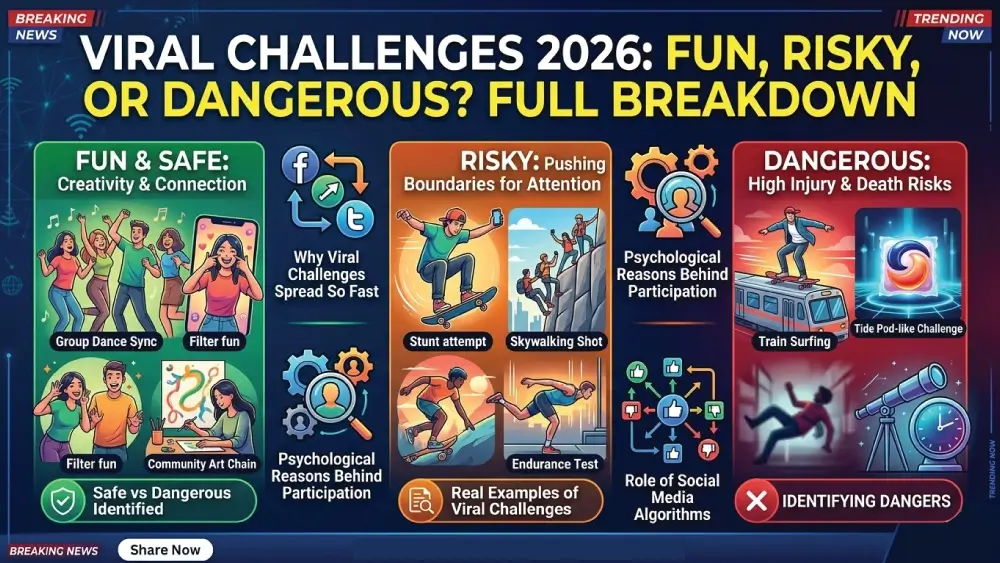
Fun & Positive Challenges
These are safe and often beneficial:
- Dance challenges
- Fitness challenges
- Awareness campaigns (environmental, mental health)
- Creative transitions and edits
Example: Throwback trends like the “2026 is the new 2016” nostalgia wave have encouraged creativity and storytelling.
These challenges are generally harmless and community-driven.
Risky Challenges
These fall in a grey area – not always dangerous but potentially harmful:
- Prank-based challenges (like cracking eggs on someone’s head)
- Food challenges (extreme spice or unusual eating trends)
- Physical stunts without safety measures
Even seemingly harmless pranks can cause emotional distress or minor injuries.
Dangerous Challenges
These are the most concerning category and can lead to serious injury or death:
- Consuming harmful substances
- Fire or electrical stunts
- Self-harm dares
- Extreme physical risks
Examples include:
- The cinnamon challenge (risk of breathing issues)
- The milk crate challenge causing fractures and injuries
- The Nyquil chicken trend involving toxic cooking methods
In extreme cases, dangerous challenges have led to hospitalizations and fatalities.
Real Examples of Viral Challenges (2026 Context)
Recent reports highlight how viral challenges continue to evolve:
- A fire-breathing challenge left a teenager severely burned after attempting a stunt involving alcohol ignition.
- A Chromebook “short-circuit challenge” caused devices to catch fire in schools.
- “Teen takeover” trends organized online have resulted in chaos, violence, and injuries in public spaces.
These examples show how quickly online trends can escalate into real-world dangers.
Psychological Reasons Behind Participation
Why do people participate in risky challenges?
Dopamine Effect
Every like, share, or comment releases dopamine, making users crave more engagement.
Social Pressure
Teens especially feel pressured to follow trends to fit in.
Viral Fame Culture
The desire to “go viral” can override rational thinking.
Curiosity & Thrill
Risky challenges offer excitement and adrenaline.
The Dark Side of Viral Fame
While viral fame may seem glamorous, it comes with serious downsides:
- Physical injuries
- Mental health issues
- Legal consequences
- Online harassment
Some challenges have even been linked to self-harm and long-term psychological damage.
Role of Social Media Algorithms
Social media platforms play a major role in amplifying viral challenges:
- Trending hashtags push content to millions
- Engagement-based algorithms reward extreme content
- Repetition increases visibility
In some cases, even fake or artificially boosted trends can go viral, influencing user behavior.
How to Identify Safe vs Dangerous Challenges
Before participating in any challenge, ask yourself:
- Does it involve physical risk?
- Could it harm you or others?
- Is it promoting unsafe behavior?
- Would you do this offline without social media?
If the answer raises doubts – it’s best to avoid it.
Tips for Staying Safe Online
Here are practical safety tips:
- Think before you act – viral fame isn’t worth injury
- Avoid challenges involving substances or fire
- Don’t give in to peer pressure
- Verify trends before participating
- Encourage friends to stay safe
Parents should also monitor online activity and have open conversations with children about digital risks.
Future of Viral Challenges
The future of viral challenges in 2026 and beyond will likely include:
- AI-generated trends
- Augmented reality (AR) challenges
- Brand-sponsored campaigns
- Stricter platform regulations
However, as technology evolves, so will the risks – making awareness more important than ever.
Conclusion
Viral challenges are a double-edged sword. They can bring joy, creativity, and global connection – but also pose serious risks when taken too far. The key lies in responsible participation and awareness. As highlighted by Trend Trackr, staying informed about ever-evolving social trends is essential in today’s digital age. Not every trend deserves your participation – and sometimes, the smartest move is to scroll past.
FAQs
What are viral challenges?
Viral challenges are online trends where users perform tasks and share them on social media to gain attention and engagement.
Why do viral challenges become popular so quickly?
They spread due to social pressure, algorithm boosts, and the desire for online fame.
Are all viral challenges dangerous?
No. Many are fun and safe, but some can be risky or harmful depending on the activity.
What are some dangerous viral challenges?
Examples include the cinnamon challenge, fire-related stunts, and harmful consumption trends.
How can I stay safe while participating in challenges?
Avoid risky activities, think critically, and never follow trends that involve harm or unsafe behavior.
Should parents be concerned about viral challenges?
Yes. Parents should stay informed and guide children about safe online behavior and digital awareness.